
Blog Details
- Member
- February 14, 2026
Longevity Play Companions
 Longevity Play Companions represent an emerging category of interactive toys and devices designed to delay biological aging processes and extend healthspan through joyful, gamified engagement. As populations age globally—including in India, where Mathura and surrounding regions face increasing senior demographics—these companions blend proven mechanisms like cognitive stimulation, physical activity, stress reduction, social connection, and habit formation into playful experiences. By 2030, converging trends in AI personalization, affordable biosensors, gamification, and gerontechnology are poised to transform traditional senior toys—such as wooden puzzles, robotic pets, and adapted board games—into proactive tools that target aging hallmarks like neuroinflammation, muscle loss, chronic stress, and epigenetic drift, all while preserving the intrinsic fun of play.
The relevance of this development stems from mounting evidence that sustained playful activities can meaningfully slow cognitive and physical decline. Current offerings, like PlanToys' Better Aging wooden sets for dexterity and brain health, Joy for All robotic companion pets for emotional comfort and loneliness reduction, or adapted classics (e.g., larger-print Scrabble and Trivial Pursuit for intergenerational play), already support mental sharpness and social bonds. Emerging research highlights how creative pursuits—music, dance, visual arts, and even video games—correlate with "younger" brain function, while gamified interventions build cognitive reserve, promote mitochondrial health, and lower cortisol through consistent micro-habits. In India's context, these companions could integrate multi-generational family dynamics, making them culturally resonant and accessible in Tier-2/3 clusters, while addressing the silver economy's growth and the need for non-stigmatizing, affordable longevity tools.
The benefits extend beyond individual well-being to broader societal gains. These toys foster intrinsic motivation for daily health practices, potentially reducing healthcare burdens by delaying frailty, sarcopenia, and dementia onset. They enhance resilience through measurable feedback (e.g., via wearables or apps), encourage social interaction (reducing isolation), and promote ethical, joyful aging rather than medicalized routines. For families and communities, they create bonding opportunities; for ecosystems like toy manufacturers or incubators, they open innovation avenues in frugal, India-centric design—leveraging low-cost sensors and local craftsmanship for scalable impact.
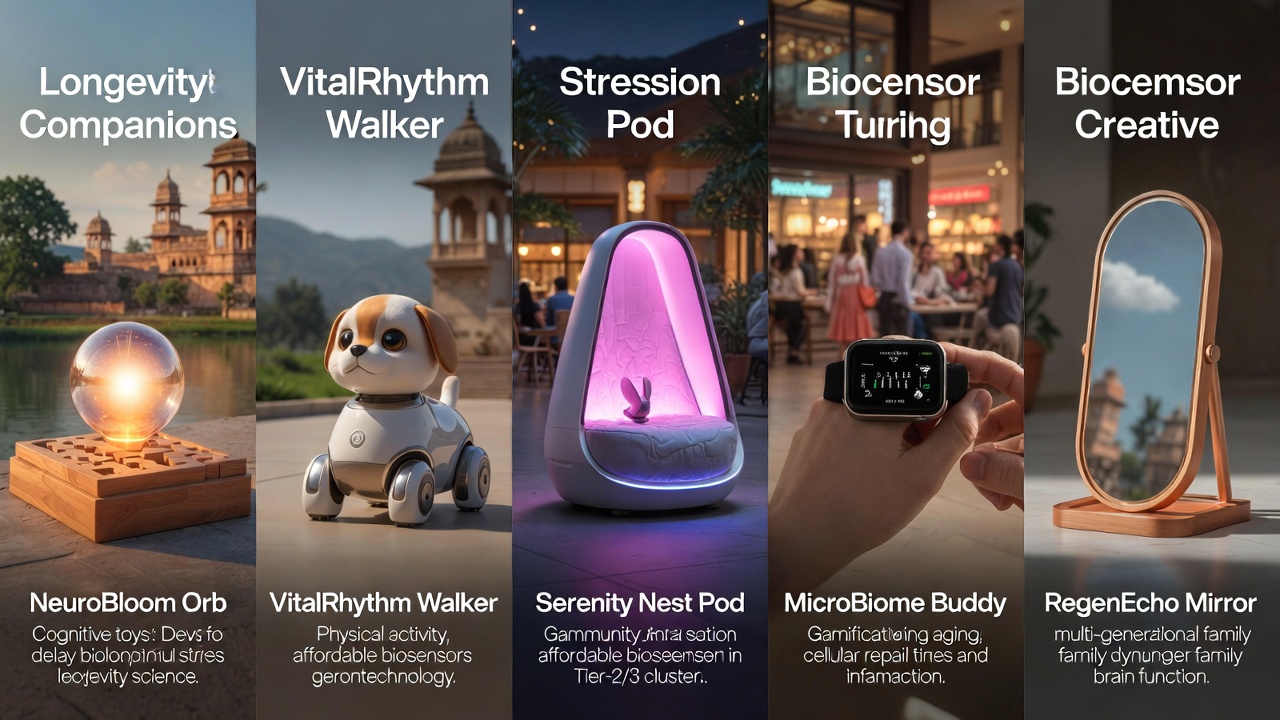
By 2030, five plausible examples of Longevity Play Companions could include:
- The NeuroBloom Orb, a handheld glowing device that personalizes brain-training puzzles and memory games using wrist-wearable data to build cognitive reserve and reduce neuroinflammation through engaging flow states, with modes for grandparent-grandchild collaboration.
- The VitalRhythm Walker, a smart handheld or cane-integrated companion that gamifies daily walks with AR treasure hunts, music cues, and rewards to improve gait, heart-rate variability, and mitochondrial function, helping prevent frailty.
- The Serenity Nest Pod, a cozy portable cushion with breath and heart-rate sensors that guides playful breathing and micro-meditations via AI-narrated stories, lowering chronic stress and supporting better sleep and epigenetic health.
- The MicroBiome Buddy, an adorable interactive figurine linked to an app that turns meal logging into fun challenges (e.g., veggie quests), gamifying gut diversity to combat inflammation and inflammaging with gentle feedback.
- The RegenEcho Mirror, a smart interactive mirror combining daily facial/voice expression games with mild light therapy to boost mood, skin health, and self-care consistency, tracking subtle aging markers to motivate ongoing play.
In summary, Longevity Play Companions offer a promising, human-centered path to intentional healthspan extension—rooted in the timeless power of play yet amplified by emerging technology. By making aging-delay habits enjoyable and embedded in daily life, they could empower individuals, strengthen families, and contribute to resilient communities, particularly in rapidly aging regions like Uttar Pradesh. This evolution aligns with broader innovation goals, inviting prototyping through challenges, university partnerships, and cluster-focused development to realize tangible impact by the end of the decade.